Showing posts with label Cats. Show all posts

Tuesday, August 25, 2020

Why is Life's Abundance Not Found in Stores?


This is one of the questions that is asked most frequently! It is not enough to put great care into developing and making exceptional premium products. For us, it's also imperative to ensure that the customer receives the product in the same, premium condition they expect. Which leads us to why our products are not offered in chain stores or online retailers. Traditional distribution methods lack product control. For example, when a product leaves a manufacturer’s facility, it’s impossible to know if that product retained its original quality after sitting in warehouses and on shelves for months on end. We not only make premium products, but we also ensure that we DELIVER premium products directly to your doorstep! 


Our products are made in frequent batches and go directly from the manufacturer to our warehouses where they are carefully boxed and shipped to customers. This controlled distribution process allows us to deliver products in their original premium condition. You may have your own experiences that reflect this. Perhaps you opened a snack only to realize that it was stale right out of the wrapper. Or maybe the flavor was a little off, or the contents of the package were pulverized. These common scenarios are the result of a typical distribution channel where the product can be subjected to extreme temperatures, extended periods in storage, environments lacking pest control, and more. In the end, the consumer may be getting a very different product than what they’d hoped for. 


Because of our direct shipping relationship with consumers, combined with our controlled manufacturing process, we know which consumer received which product, down to the lot number. In the event there is ever an issue with a product, our proactive communications system allows us to reach 6,000 people by phone in just one hour! We can also reach them by email and through the mail.


Our no-worry notification system gives people the transparency they desire and helps boost confidence in their purchase decision. Another reflection of our purpose, this system is in place to protect consumers to the level we think they deserve. We view the traditional system of product recalls to be inherently broken. That is, unless the problem is big enough to have potentially harmed a large number of people, most consumers will never hear about a recall. Yet we have a solution to keep customers safe that we not only feel is acceptable, but that we take pride in. 


*    *    *    *    *    *    *    *


Raven Hannah is a self-described animal whisperer, lifelong pet parent, and owner of HolisticPetsAndPeeps.com & TheGiftedPet.com. She is certified as a holistic consultant, aromatherapist, Reiki practitioner (for animals and people), and pet nutritionist. She encourages others to celebrate animals as part of the family, as well as keep them happy, healthy, and spoiled! When Raven isn’t busy being a slave to her very demanding senior cats or helping her favorite rescues with fundraising projects, she is most likely working on growing her businesses and raising awareness in an effort to make this world a better place for all creatures.


Tuesday, October 1, 2019

Here's Why Cats Cannot Be Vegan!


Many pet parents have adopted a vegan or vegetarian lifestyles for health, environmental, and ethical reasons. Naturally, some cat parents wonder if they should also be buying vegan cat food for their furry family member. So, can cats be vegan? The answer is no! Here's why your cat requires meat in his or her diet.

Your Cat is an Obligate Carnivore

A vegan or vegetarian diet simply cannot provide all of the nutrients that your cat needs. In fact, these specific nutrients can only be supplied through the ingestion of animal meat. Why? 

Cats Don't Produce Enough Taurine

Unlike many species (including humans and dogs), cats can’t synthesize the essential amino acid taurine. Without enough taurine in their diet, cats are likely to develop a heart condition known as dilated cardiomyopathy, experience vision problems, contract UTIs and have other health issues. Cats must ingest taurine through their diet, which can only be found in animal sources ~ hence the term obligate carnivore. Plant sources simply do not provide this amino acid. 

Not All Proteins Are Created Equal

Cats also require a high-protein diet. While human vegetarians are able to substitute protein sources such as beans and lentils for animal meat, this isn’t possible for felines. It again comes back to those amino acids, which differ depending on the type of protein. Besides taurine, other essential nutrients for cats include vitamin D, vitamin A, and arachidonic acid ~ all readily found in high-protein animal sources.


What About Vegan Cat Food?

Now that we know how important animal protein is for your cat’s diet, you may be wondering what ingredients are substituted in vegan cat food. The truth is, most vegan or vegetarian cat food has not passed feeding trials by AAFCO, the Association of American Feed Control Officials. AAFCO works with the FDA (Center of Veterinary Medicine) and state governments to recognize the state laws that regulate commerce in animal feed and pet food. 

Vegan cat food that is AAFCO-compliant primarily contains ingredients such as oats and plant proteins (often corn and peas), as well as synthetic versions of essential nutrients (taurine, vitamin D, etc.).

It’s important to note that because your cat is an obligate carnivore, he can’t digest plant material very well. His gastrointestinal tract and metabolism have adapted to eating meat.

The addition of synthetic ingredients may strike you as problematic, as it does many veterinarians. Another problematic aspect of vegetarian and vegan cat food? It’s often high in carbohydrates, which are generally unnecessary for cats and may cause digestive issues.

Work With Your Veterinarian

If you are dead set on buying vegan cat food, work with your vet to make sure your cat stays healthy. Dr. Armaiti May, DVM, CVA suggests having your vet track your cat’s overall health through blood work and urine content, as well as cardiac ultrasounds and retinal evaluations. 

Can Dogs Be Vegan?

Dogs are naturally omnivores, meaning they can get nutrients from both plants and meat. And unlike cats, dogs can synthesize their own taurine, which makes them a candidate for vegan or vegetarian diets. Although challenging, it is possible to transition your canine to a plant-based diet. Make sure you purchase AAFCO-compliant dog food and work with your vet to track your dog’s health. 


As a longtime vegan myself, I agonized over what to feed my cats and dogs for many years. There were many sleepless nights and tortured days, feelings of immense guilt and shame, as well as a lot of experimentation, trial and error, and the expense (and wastefulness) of trying to find an appropriate vegan cat food that wouldn't jeopardize their health AND that they would actually eat! Dogs are much easier since they are omnivores but cats . . . much trickier for those of us dedicated to living a vegan lifestyle and wrestling with the scientific facts of what cats require nutritionally. 

I realized that I had to find a way to make peace with my decision so I went with a smaller company whose holistic vet formulator cared enough to address my concerns personally and discussed the health impacts of trying to force my cats to also be vegan. It wasn't an easy process, however, it was necessary. 

I truly hope that all pet parents, vegan or not, will consider feeding your pets our award-winning, never recalled, holistically formulated pet food, treats, and supplements from Life's Abundance. 


For more information or to make a purchase, be sure to visit:


*  *  *  *  *  *  *  *  *  *  *

Raven is an engaging entrepreneur who encourages others to celebrate pets as part of the family, as well as keep them happy, healthy, and spoiled with her online specialty pet boutiques (www.TheGiftedPet.com & www.PamperedPetEssentials.com), and premium pet food business (www.PremiumPetFoodStore.com)
She is an enthusiastic advocate for animal rights, including wildlife & nature and likes to dabble in creative projects such as photography, digital art, custom greeting cards and more!
Raven is also dedicated to helping pet parents and other humans stay happy, healthy, and balanced with her 100% therapeutic-grade essential oils, oil-infused nutritional supplements, and oil-related lifestyle enhancements via Holistic Oils For Pets & Peeps! (www.HolisticOilsForPetsAndPeeps.com)
For more information, please use the Contact Me! page on this blog or visit her Facebook page to PM her www.facebook.com/HolisticPetsNPeeps


Wednesday, July 24, 2019

NEW! HolistaPet CBD Oil For Dogs, Cats & Horses!


http://bit.ly/HolistaPetCBD


NEW to the Holistic Pets & Peeps family of holistic remedies for pets . . .


HolistaPet CBD Oil For Dogs, Cats & Horses ~ Potential Benefits of CBD for Pets


What is HolistaPet CBD Oil? ~ Cannabidiol (CBD) is one of the most highly researched compounds found in the industrial hemp plant (Cannabis Sativa). This natural occurring cannabinoid is gaining more popularity over the past few years because of its potential benefits. Our CBD Oil For Dogs and our delicious CBD dog treats contain NO THC, are non-psychoactive and will NOT get your pet “High”.

HolistaPet believes that your pet’s health and comfort should always come first. They are dedicated to providing natural remedies to reduce your pet’s pain or discomfort without all the side effects of traditional prescription drugs. All products have been crafted to help aid in the relief of pain, inflammation, arthritis, digestive issues, allergies, skin problems, seizures, nausea, cancer, tumors, anxiety, and phobias. They wholeheartedly believe that consuming natural occurring superfoods can help lower the risk of certain illnesses and promote overall health and wellness while also encouraging a healthy appetite.

HolistaPet was founded by a group of health-conscious enthusiasts with over 25 years of combined experience in the organic food industry. They’ve been able to partner up with hemp farms in Colorado to produce some of the highest grade CBD pet products available on the market. 

As a result, they came out with a unique line of organic, plant-based CBD pet products. Their products contain only the best organic vegan ingredients. They are cruelty-free, non-GMO, gluten-free and dairy-free. They use only pure wholesome ingredients, no artificial flavors or colors.


CBD Oil for Dogs & Cats ~ Potential Uses ~ Research has shown that CBD may act as an anti-inflammatory, anticonvulsant, antiemetic, antioxidant, anxiolytic and antipsychotic agent. Therefore many of our customers are sharing their experience with CBD as a potential aid for many ailments including ~ pain & inflammation, nausea, stress & anxiety, skin conditions & allergies, and more. 


Potential Benefits of CBD Oil for Horses ~ Cannabidiol (CBD) is produced naturally by the hemp plant. Recent studies have found how CBD works with your horse’s endocannabinoid system to potentially help improve overall health.


CBD oil is a great way to ensure your horse receives a proper daily nutrition balance. Veterinarians nationwide are recommending HolistaPet CBD as the top holistic choice for helping promote a healthy life for your four-legged friend.


Find out more on the potential benefits of CBD and place your order here:


http://bit.ly/HolistaPetCBD


Questions? Please feel free to use the Contact Me! form on this page!!


*  *  *  *  *  *  *  *  *  *  *

Raven is an engaging entrepreneur who encourages others to celebrate pets as part of the family, as well as keep them happy, healthy, and spoiled with her online specialty pet boutiques (www.TheGiftedPet.com & www.PamperedPetEssentials.com), and premium pet food business (www.PremiumPetFoodStore.com)
She is an enthusiastic advocate for animal rights, including wildlife & nature and likes to dabble in creative projects such as photography, digital art, custom greeting cards and more!
Raven is also dedicated to helping pet parents and other humans stay happy, healthy, and balanced with her 100% therapeutic-grade essential oils, oil-infused nutritional supplements, and oil-related lifestyle enhancements via Holistic Oils For Pets & Peeps! (www.HolisticOilsForPetsAndPeeps.com)
For more information, please use the Contact Me! page on this blog or visit her Facebook page to PM her www.facebook.com/HolisticPetsNPeeps


Friday, May 24, 2019

How to Keep Wildlife Safe From Your Cat

Calling a house cat domesticated is comical at best. We may not think about our cats’ predatory instincts while they’re napping in cardboard boxes or sitting on our chests while we marathon our favorite TV shows, but the truth is that felines aren’t that far removed genetically from their wild relatives, so they retain many of their hunting instincts.
Your fierce little feline’s adorable displays of affection ~ you know, the dead birds and the gutted lizards left on the porch with your morning newspaper ~ are actually problematic for the proverbial circle of life. House cats kill somewhere between 1.3 billion and 4 billion birds in the U.S. every year, according to the Audubon Society.
The issue is so prominent and concerning that many organizations have created programs warning about the dangers of outdoor cats, such as Ohio State University’s Indoor Pet Initiative and the Cat Indoors program through the American Bird Conservancy.
Adventure cats are, in our humble opinion, some of the best and brightest companions to have by your side as you trek across the world. Surfing? Hiking? Camping? Sailing? The sky is the limit for our favorite feline friends, and we wouldn’t have it any other way. 
Sometimes, though, things can go wrong for even the most responsible cat owners. While we believe our kitties can absolutely join us in the great outdoors, keeping the small wildlife and birds safe should be a primary concern, so read on for tips on how you can do just that.

Waffles the cat on a hike.
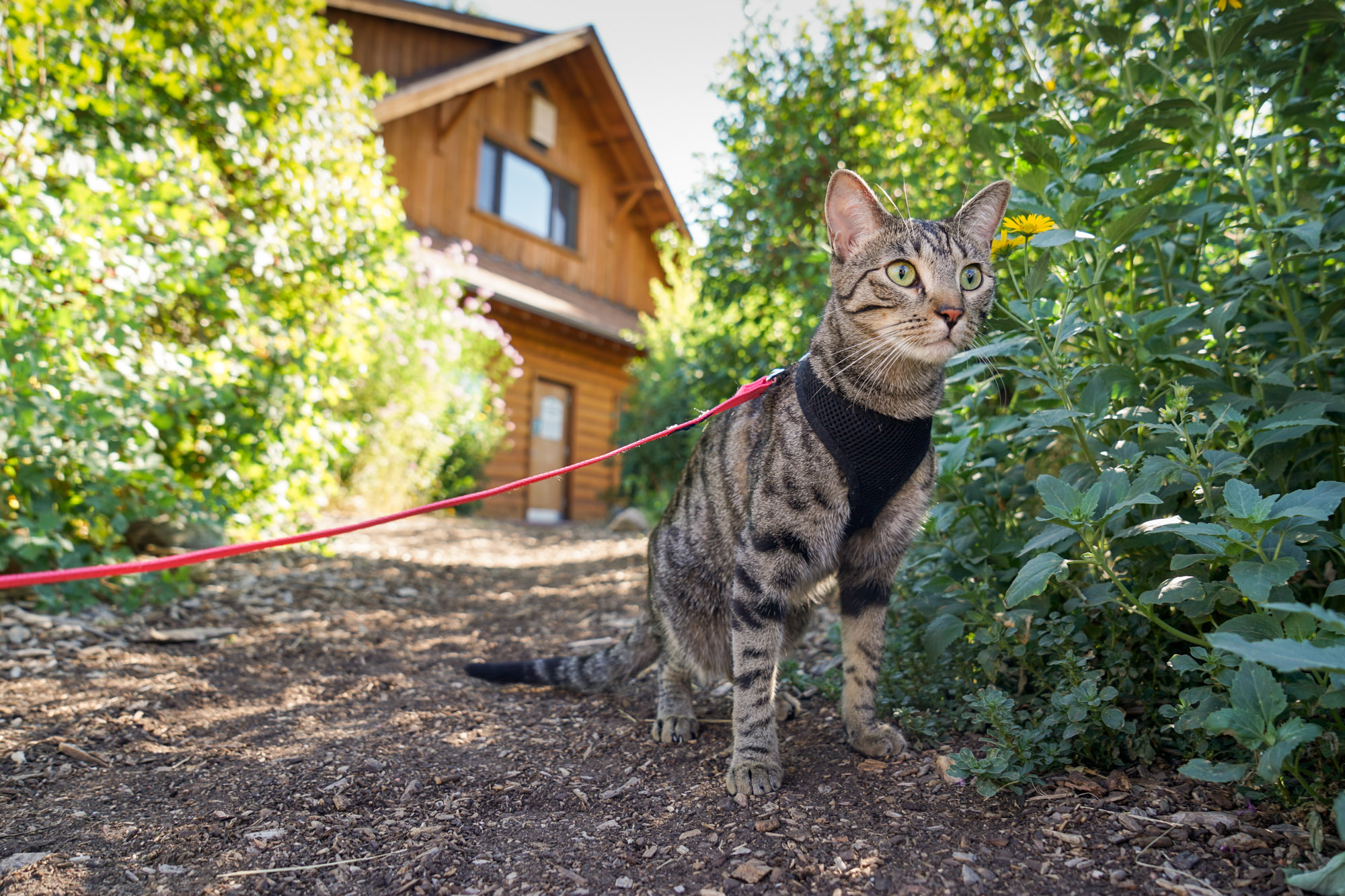
Even if you’re in a familiar area or in your own yard, keep your cat on a leash. (Photo: Cody Wellons)
In the Yard

Responsible cat owners have long let their pets roam the backyard without a leash, but accidents do happen, so we recommend always keeping your cat on a leash when he’s outside ~ for his safety and for the safety of wildlife. In addition to a leash, there are some other surprisingly easy ways to help keep the local little critters safe.

Keep birdbaths and feeders away from shrubbery where a cat could easily hide to attack. Cats can’t climb metal poles, so installing feeders or birdhouses atop these (instead of dangling them from a branch) can also make a big difference.

Tree wraps made of hard-to-grip metal, aluminum foil or plastic can create the same effect. Tree baffles are cones made of wire or metal to wrap around the base of trees, and they’re effective when positioned 4 feet to 5 feet above the ground.

You can also consider building a catio, so your kitty can enjoy some fresh air and sunshine while the rest of nature stays safe.

On Adventures

When adventuring, be sure your cat companion is wearing an appropriate harness and leash, preventing them from wandering off too far and causing damage when you least expect it. Keep them contained overnight when camping to ensure they can’t slip out of your tent or hammock to leave with you a dearly departed gift in the morning.

If you’re in an area laden with small animals, be sure to keep a close eye on your cat, or consider carrying them until the danger ~ and the lure of the hunt ~ has passed.


outdoor cat with bell on collar
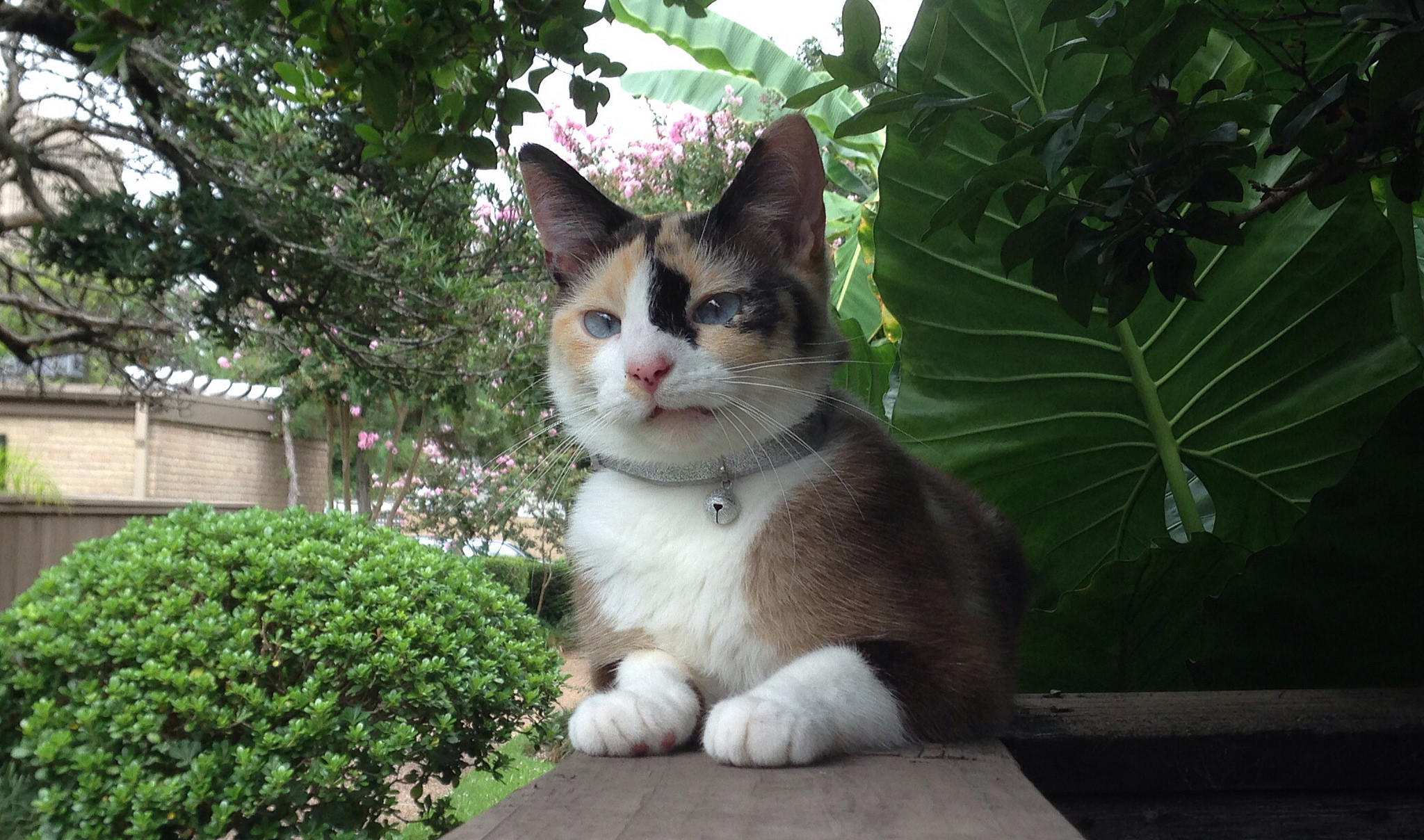
A bell on the collar may alert wildlife that a predator is near. (Photo: R. Crap Mariner)

Consider Some Feline Fashion
Whether you’re adventuring or simply lounging in the yard, another easy way to keep your cat from pouncing on birds, moles and other creatures lies in a variety of attachments made for cat collars. This can be something as simple as attaching a bell to your cat’s collar, or it may be more involved, such as the items outlined below.
BirdsBeSafe Collars are large and bright and are intended to allow birds to see a cat before it’s too late. They fit over your cat’s collar, and they come in vivid colors that are prominent outside and easily visible, even in low light. Your kitty will look meownificent in one of three colors and pattern designs for $9.99 USD.
CatBibs prevent cats from being able to pounce properly, and they even tout some scientific backing. Murdoch University’s Biological Sciences Department ran an independent field trial and found that CatBibs stopped 81 percent of cats from catching all types of birds and 45 percent from catching small mammals. The bib also comes with reflective logo designs, making your purrfect companion visible at night to not only nocturnals but also humans. The bibs attach to cat collars and can be purchased for $9 USD.


Friday, November 2, 2018

Rub My Belly . . . No Wait . . . Don't! ~ The Best Way to Pet a Cat


cat-petting

If you haven't had much experience with cats, or if you want to teach your kids how they can be affectionate without worrying about getting scratched, we’ve got the inside scoop on how felines want to be petted.
So, what’s the correct way to pet a cat? You may think, no one needs to tell me how to do a simple thing. But the truth is that petting a cat isn’t something you can do by intuition alone. If you’ve never had a close relationship with a cat, maybe because you had a bad experience before, don’t worry. We can help you change all that with a short tutorial. Simply follow the guidelines below and you too can begin to know the joys of feline companionship.
If there’s one rule to keep in mind, it’s that petting a cat is very different from petting a dog. While dogs usually love a good belly rub, cats typically do not. Why is this true? It boils down to psychology. Generally speaking, dogs are usually pretty secure in their identity as a predator. You may even know of a few tiny dogs who believe themselves to be big bad wolves (looking at you Chihuahuas and Terriers). However, cats are more cautious, because in the wild, they identify as both predator and prey. That’s why cats remain on high alert much of the time. If a cat feels threatened ~ like when someone they don’t know unexpectedly touches their soft underbelly ~ he will act defensively to protect his vital organs. Better you than him, he would say.

right-spot

So, the secret spots where cats enjoy being scratched are where a cat’s scent glands are located: in the cheeks, the top of the head and at the base of the tail. When a cat rubs against a piece of furniture or your leg, it’s referred to as bunting. Bunting is how a cat spreads his scent. It’s his way of saying, “Hey, I like you and want to include you among the things that make me happy.” Bunting releases pheromones, making objects – or people - in his environment smell familiar. It also has the added benefit of reducing stress!
Around the head is a sure-fire hit with most kitties. Rub your cat along the crown at the top of the head, gently under his chin, in front of the ears and cheeks behind the whiskers. Hit this last spot just right and your cat will actually rotate his whiskers forward, indicating interest and friendliness.
With cats, it really pays to be observant about how each individual responds to different kinds of touches. Most cats like it when you run your hand along the spine. Some even enjoy gentle pressure at the base of the tail. In fact, they’ll let you know by sticking their tails straight up. If you notice any growling or tail-swishing, these are clues that your cat is becoming overstimulated and may lash out. For cats with heightened sensitivities, it’s best to stick with gently scratching their head and neck.

kitty-scritches

If you’re interacting with a timid kitty, always let them come to you first. As you might imagine, chasing someone down is not a good way to start a new relationship with a cat (or anyone, for that matter). Instead, try a “peace offering.” When approaching timid cats, give them a couple of tasty morsels, like our Gourmet Cat Treats for Skin & Coat Health, to show that you’re friendly and mean no harm. This positive reinforcement for affectionate behavior could have your cat saying, “I think this is the beginning of a beautiful friendship.”
We hope you find these tips helpful for tuning you in to your inner cat nature, and that you too will now feel completely at ease with all kitties.


*  *  *  *  *  *  *  *  *  *  *


Raven is an engaging entrepreneur who encourages others to celebrate pets (and ALL animals) as part of the family, as well as keep them happy, healthy, and spoiled with her Holistic Healing, Animal Intuition, Aromatherapy, Animal Reiki (www.HolisticPetsAndPeeps.com), as well as her premium pet food business (http://www.PremiumPetFoodStore.com)

For more information, please visit her Facebook page to PM her (https://www.facebook.com/HolisticPetsNPeeps), or email her at HolisticPetsAndPeeps@gmail.com.

Wednesday, October 31, 2018

Essential Nutrition 101 ~ Sulfurzyme® Powder & Capsules for Health & Healing (Animals & People!)


Sulfurzyme® combines wolfberry with MSM, a naturally occurring organic form of dietary sulfur needed by our bodies every day to maintain the structure of proteins, protect cells and cell membranes, replenish the connections between cells, and preserve the molecular framework of connective tissue. MSM also supports the immune system, the liver, circulation, and proper intestinal function and works to scavenge free radicals. Wolfberries contain minerals and coenzymes that support the assimilation and metabolism of sulfur. FOS is added to this formula to support normal digestive system health.


Sulfurzyme® is a source of MSM (methylsulfonylmethane) which is a natural anti-inflammatory and vital nutrient for body function. Joined with NingXia Wolfberry, this product far surpasses any other MSM product on the market and appears to have much greater bioavailability from the combination.  Both the capsule and the powder form can be used in all animals. Sulfurzyme® is incredibly helpful in cases of arthritis, all forms of skin conditions, autoimmune diseases, healing of wounds, reductions of scar tissue, and just general cell structure and function. There are not many conditions that are not benefited by Sulfurzyme®.  Both the opened capsule and powder form can be mixed into foods, and even cats easily ingest it in this way. It is very difficult to give too much of this product, and if you did, you would likely only see softened stools. One capsule of Sulfurzyme® contains approximately 1/4 teaspoon of the powder. 

Birds & Exotics:  Start with a small sprinkling into foods, and gradually increase as needed. Approximately 1/4 to 1/2 of a capsule is generally consumed per day. More can certainly be used in cases of need.

Cats:  Gradually increase to 1/4 to 1 capsule per day. More can be used when needed.

Dogs:  Small dogs up to 20 pounds (9 kg) will generally get between 1 capsule once or twice a day, to 1 1/2 teaspoons per day.  Medium dogs 20-50 pounds (9 - 23 kg) will generally get between 1 capsule twice a day, to 1 heaping teaspoon per day. Large dogs over 50 pounds (23 kg) will generally get between 2 capsules twice a day, to 1 tablespoon per day. Daily amounts are split into multiple doses to be given throughout the day, and larger amounts can be used, if necessary.

Large Animals:  Up to 1 heaping tablespoon can be given twice a day in cases of need (especially in autoimmune conditions).


Should you wish to get started with your own oils and products, we recommend that you enroll as a wholesale member in Young Living by purchasing the Premium Starter Kit, which gives you the Everyday Oils (including Joy & Valor), a bonus oil called Stress Away, a Home Diffuser, as well as samples to try or share. This is an excellent investment in your health, as well as the health of your animals. 

You also have the option of joining as a Retail Member, as opposed to a Wholesale Member, so it is completely up to you. There are also options for monthly Essential Rewards orders, which earn you points that you can spend on additional products, as well as promotional items every month that you can earn for free, just by shopping for what you already need. 

Please ask us for additional information, or you may learn more by logging on to:


Thank you for joining us on this wonderfully holistic journey. We are truly grateful to have you here with us and look forward to helping you any way we can! ♥


Become a Wholesale Member (Sponsor / Enroller #1797711) 
with  ANY Premium Starter Kit and receive an Essential Oils 
Pocket Reference Guide (Sixth Edition) and an Essential Oils & Pets 
booklet as our way of saying thank you for choosing holistic 
essential oil products for your animals! 


*  *  *  *  *  *  *  *  *  *  *


Raven is an engaging entrepreneur who encourages others to celebrate pets (and ALL animals) as part of the family, as well as keep them happy, healthy, and spoiled with her Holistic Healing, Animal Intuition, Aromatherapy, Animal Reiki (www.HolisticPetsAndPeeps.com), as well as her premium pet food business (http://www.PremiumPetFoodStore.com)

For more information, please visit her Facebook page to PM her (https://www.facebook.com/HolisticPetsNPeeps), or email her at HolisticPetsAndPeeps@gmail.com.


Saturday, September 29, 2018

Tips for Calming Stressed Cats


beautiful-whiskery-kitty

It’s a common belief that cats are highly susceptible to stress. How many memes have you seen referencing “neurotic kitty”? But the truth is, a cat’s normal state shouldn’t be stressed, she should be happy and relaxed! If our kitties are constantly showing signs of stress and anxiety, we owe it to them to identify solutions to help them feel better.
So how do you know if your cat is stressed versus just being naturally feisty? Well, the signs are subtle. Oftentimes, it’s a subtle change in behavior that doesn’t even seem to be related to anxiety. Some of the more common changes include . . . . 

  • Urinating or defecating outside the litter box
  • Isolating themselves from others in the household
  • Excessive grooming
  • Prolonged periods of sleep
  • Excessive vocalization beyond what is typical (remember, some kitties are naturally more talkative than others)
  • Increased scratching
  • Aggression

Over time, stress hormones can contribute to physical symptoms such as diarrhea, constipation, changes in appetite or even the painful condition known as Feline Lower Urinary Tract Disease (FLUTD). Be aware that these signs are symptomatic of other medical conditions, so don’t be too quick to assume you’re dealing with feline anxiety before discussing the symptoms with your veterinarian. One of the best ways to minimize the likelihood of chronic medical conditions is to feed your cat a high-quality, appropriate diet. Since you’re reading the Life’s Abundance blog, I’m probably preaching to the choir on that topic!

peeking-kitty

Let’s say your cat is exhibiting one or more of these signs of anxiety. You’ve brought her in for a check-up and medically, everything checks out. What next?
First, try to pinpoint the source of the stress and eliminate it, if possible. We tend to view these issues through our human lens, so it’s important to remember that unexpected things can be at the root of your cat’s stress. Some of the more obvious reasons include changes in living conditions ~ from divorce, moves, a new companion animal in the house, or new babies ~ to the most obvious physical cause, which is pain. But little changes can also provoke anxiety: new furniture, a neighbor’s dog barking, a dirty litter box, being denied access to their favorite location, a neighborhood tomcat taunting them from the yard, even music they don’t like! As you can see, it’s a long list.
Environmental modifications can make a big difference. For indoor cats, boredom can be a near-constant stressor, so provide lots of vertical space for exploration (they love being elevated). Home-built or store-bought cat trees are a great solution. Puzzle feeders can be a good source of environmental enrichment, as they appeal to their hunting instinct. Pheromone diffusers or sprays can also have a calming effect for some.

blue-eyed-kitty

And lastly, make sure your kitty is getting daily interaction and enrichment with you. It’ll build their confidence and form deeper connections with their caregivers. Believe it or not, many behaviorists recommend clicker training as a great way to bond with your cat. This gives her a sense of control over her environment and also offers the promise of a yummy incentive like Gourmet Cat Treats for Healthy Skin & Coat. Cats can learn amazing tricks with clicker training and treats, but it’s also a great way to reward good behavior generally.
Try to set aside some one-on-one time for your cat in the space where she is most relaxed. Optimally, this is something you’ll do every day at the same time because cats are true creatures of habit. No distractions, which means leave your phone in another room and turn off the TV. Brush, pet, sing . . . . do whatever pleases your cat the most. It’ll be good for both of you!
A happy cat means a happy you! If you think your cat is suffering from stress or anxiety, try some of these suggestions to help them live the “purr-fect” life.

For more information on feeding your pets a healthy, premium line of pet food and treats, please use the Contact Me page or visit www.PremiumPetFoodStore.com!

*  *  *  *  *  *  *  *  *  *  *


Raven is an engaging entrepreneur who encourages others to celebrate pets (and ALL animals) as part of the family, as well as keep them happy, healthy, and spoiled with her Holistic Healing, Animal Intuition, Aromatherapy, Animal Reiki (www.HolisticPetsAndPeeps.com & www.HealingOilsForAnimals.com), as well as her premium pet food business (http://www.PremiumPetFoodStore.com)

For more information, please visit her Facebook page to PM her (https://www.facebook.com/HolisticPetsNPeeps), or email her at HolisticPetsAndPeeps@gmail.com.


Monday, September 17, 2018

5 Meds That Are Toxic to Pets


dog-at-vet

As a lifelong pet parent, I'm always cognizant of keeping anything even remotely upsetting to little pet tums (and their overall well-being) out of reach. That includes toxic foods, medicine, plants, and anything that they may decide is a new toy. 
Most of us should be aware that chocolate and grapes can be toxic for pets, but potential threats can lurk elsewhere in your home. Prescription and over-the-counter medications are among the top reasons people call into poison control hotlines for both kids and pets, and with good reason. Here are the top five medications of concern when it comes to pets and toxicity:
1. Ibuprofen. As the active ingredient in common over-the-counter products such as Advil and Motrin, ibuprofen is unfortunately ingested by pets both accidentally and intentionally by owners unaware of its potential side effects. Cats are particularly sensitive to its effects. The most common clinical sign is vomiting or gastrointestinal ulcers, though it can also lead to kidney damage. Other NSAIDS such as Aleve can also be problematic.
2. Acetaminophen. Speaking of pain medications, acetaminophen-containing products such as Tylenol are also high on the list of pet poisons. Like ibuprofen, cats are particularly sensitive to the effects of this medication, and one pill is enough to kill a cat. Both cats and dogs can experience liver damage as a result of this medication, starting with decreased appetite and leading to yellow skin (a sign of jaundice), swollen paws or difficulty breathing. Acetaminophen is a common ingredient in combination products like cough and flu remedies, so be careful to read the label on your products!

pill-spill-dog

3. Stimulants. ADHD medications such as Adderall and Ritalin can be toxic to companion animals. Sadly, they are more likely to be ingested by pets as they are often prescribed for children who may be less vigilant about keeping the pills out of the reach of the household dogs and cats. Signs of ingestion may include dilated pupils, seizures, shaking or hyperactivity.
4. Antidepressants. Antidepressants fall into several categories depending on their mechanism of action. In the most commonly prescribed medications (such as Prozac, Paxil, Zoloft, and Effexor) work by increasing the concentration of neurotransmitters in the brain. When overdosed, the brain can be flooded with these chemicals and pets can experience a variety of symptoms such as depression, hyperexcitability, seizures, and vomiting.
5. Vitamin D. As doctors are starting to diagnose Vitamin D deficiency more often, this is a common supplement in people’s medicine cabinets. When there is too much in the body, blood calcium levels also rise, resulting in serious damage to the kidneys. It is so effective at causing damage that it's commonly used in rat poisons such as d-Con. Vitamin D might appear on rodenticide labels as “cholecalciferol,” and should be avoided.

There’s no time like the present to ensure any of these items in your house are safely secured away from prying pet paws. If you suspect your dog or cat has ingested any of these harmful substances, call your veterinarian or a pet poison control helpline ASAP!

~ Pet Poison Helpline ~ www.PetPoisonHelpline.com  
($59 incident fee applies)

(A $65 consultation fee may be applied to your credit card)


*  *  *  *  *  *  *  *  *  *  *

Raven is an engaging entrepreneur who encourages others to celebrate pets (and ALL animals) as part of the family, as well as keep them happy, healthy, and spoiled with her Holistic Healing, Animal Intuition, Aromatherapy, Animal Reiki (www.HolisticPetsAndPeeps.com & www.HealingOilsForAnimals.com), as well as her premium pet food business (http://www.PremiumPetFoodStore.com)

For more information, please visit her Facebook page to PM her (https://www.facebook.com/HolisticPetsNPeeps), or email her at HolisticPetsAndPeeps@gmail.com.