Showing posts with label Feline Wellness. Show all posts

Friday, November 2, 2018

Rub My Belly . . . No Wait . . . Don't! ~ The Best Way to Pet a Cat


cat-petting

If you haven't had much experience with cats, or if you want to teach your kids how they can be affectionate without worrying about getting scratched, we’ve got the inside scoop on how felines want to be petted.
So, what’s the correct way to pet a cat? You may think, no one needs to tell me how to do a simple thing. But the truth is that petting a cat isn’t something you can do by intuition alone. If you’ve never had a close relationship with a cat, maybe because you had a bad experience before, don’t worry. We can help you change all that with a short tutorial. Simply follow the guidelines below and you too can begin to know the joys of feline companionship.
If there’s one rule to keep in mind, it’s that petting a cat is very different from petting a dog. While dogs usually love a good belly rub, cats typically do not. Why is this true? It boils down to psychology. Generally speaking, dogs are usually pretty secure in their identity as a predator. You may even know of a few tiny dogs who believe themselves to be big bad wolves (looking at you Chihuahuas and Terriers). However, cats are more cautious, because in the wild, they identify as both predator and prey. That’s why cats remain on high alert much of the time. If a cat feels threatened ~ like when someone they don’t know unexpectedly touches their soft underbelly ~ he will act defensively to protect his vital organs. Better you than him, he would say.

right-spot

So, the secret spots where cats enjoy being scratched are where a cat’s scent glands are located: in the cheeks, the top of the head and at the base of the tail. When a cat rubs against a piece of furniture or your leg, it’s referred to as bunting. Bunting is how a cat spreads his scent. It’s his way of saying, “Hey, I like you and want to include you among the things that make me happy.” Bunting releases pheromones, making objects – or people - in his environment smell familiar. It also has the added benefit of reducing stress!
Around the head is a sure-fire hit with most kitties. Rub your cat along the crown at the top of the head, gently under his chin, in front of the ears and cheeks behind the whiskers. Hit this last spot just right and your cat will actually rotate his whiskers forward, indicating interest and friendliness.
With cats, it really pays to be observant about how each individual responds to different kinds of touches. Most cats like it when you run your hand along the spine. Some even enjoy gentle pressure at the base of the tail. In fact, they’ll let you know by sticking their tails straight up. If you notice any growling or tail-swishing, these are clues that your cat is becoming overstimulated and may lash out. For cats with heightened sensitivities, it’s best to stick with gently scratching their head and neck.

kitty-scritches

If you’re interacting with a timid kitty, always let them come to you first. As you might imagine, chasing someone down is not a good way to start a new relationship with a cat (or anyone, for that matter). Instead, try a “peace offering.” When approaching timid cats, give them a couple of tasty morsels, like our Gourmet Cat Treats for Skin & Coat Health, to show that you’re friendly and mean no harm. This positive reinforcement for affectionate behavior could have your cat saying, “I think this is the beginning of a beautiful friendship.”
We hope you find these tips helpful for tuning you in to your inner cat nature, and that you too will now feel completely at ease with all kitties.


*  *  *  *  *  *  *  *  *  *  *


Raven is an engaging entrepreneur who encourages others to celebrate pets (and ALL animals) as part of the family, as well as keep them happy, healthy, and spoiled with her Holistic Healing, Animal Intuition, Aromatherapy, Animal Reiki (www.HolisticPetsAndPeeps.com), as well as her premium pet food business (http://www.PremiumPetFoodStore.com)

For more information, please visit her Facebook page to PM her (https://www.facebook.com/HolisticPetsNPeeps), or email her at HolisticPetsAndPeeps@gmail.com.

Saturday, September 29, 2018

Tips for Calming Stressed Cats


beautiful-whiskery-kitty

It’s a common belief that cats are highly susceptible to stress. How many memes have you seen referencing “neurotic kitty”? But the truth is, a cat’s normal state shouldn’t be stressed, she should be happy and relaxed! If our kitties are constantly showing signs of stress and anxiety, we owe it to them to identify solutions to help them feel better.
So how do you know if your cat is stressed versus just being naturally feisty? Well, the signs are subtle. Oftentimes, it’s a subtle change in behavior that doesn’t even seem to be related to anxiety. Some of the more common changes include . . . . 

  • Urinating or defecating outside the litter box
  • Isolating themselves from others in the household
  • Excessive grooming
  • Prolonged periods of sleep
  • Excessive vocalization beyond what is typical (remember, some kitties are naturally more talkative than others)
  • Increased scratching
  • Aggression

Over time, stress hormones can contribute to physical symptoms such as diarrhea, constipation, changes in appetite or even the painful condition known as Feline Lower Urinary Tract Disease (FLUTD). Be aware that these signs are symptomatic of other medical conditions, so don’t be too quick to assume you’re dealing with feline anxiety before discussing the symptoms with your veterinarian. One of the best ways to minimize the likelihood of chronic medical conditions is to feed your cat a high-quality, appropriate diet. Since you’re reading the Life’s Abundance blog, I’m probably preaching to the choir on that topic!

peeking-kitty

Let’s say your cat is exhibiting one or more of these signs of anxiety. You’ve brought her in for a check-up and medically, everything checks out. What next?
First, try to pinpoint the source of the stress and eliminate it, if possible. We tend to view these issues through our human lens, so it’s important to remember that unexpected things can be at the root of your cat’s stress. Some of the more obvious reasons include changes in living conditions ~ from divorce, moves, a new companion animal in the house, or new babies ~ to the most obvious physical cause, which is pain. But little changes can also provoke anxiety: new furniture, a neighbor’s dog barking, a dirty litter box, being denied access to their favorite location, a neighborhood tomcat taunting them from the yard, even music they don’t like! As you can see, it’s a long list.
Environmental modifications can make a big difference. For indoor cats, boredom can be a near-constant stressor, so provide lots of vertical space for exploration (they love being elevated). Home-built or store-bought cat trees are a great solution. Puzzle feeders can be a good source of environmental enrichment, as they appeal to their hunting instinct. Pheromone diffusers or sprays can also have a calming effect for some.

blue-eyed-kitty

And lastly, make sure your kitty is getting daily interaction and enrichment with you. It’ll build their confidence and form deeper connections with their caregivers. Believe it or not, many behaviorists recommend clicker training as a great way to bond with your cat. This gives her a sense of control over her environment and also offers the promise of a yummy incentive like Gourmet Cat Treats for Healthy Skin & Coat. Cats can learn amazing tricks with clicker training and treats, but it’s also a great way to reward good behavior generally.
Try to set aside some one-on-one time for your cat in the space where she is most relaxed. Optimally, this is something you’ll do every day at the same time because cats are true creatures of habit. No distractions, which means leave your phone in another room and turn off the TV. Brush, pet, sing . . . . do whatever pleases your cat the most. It’ll be good for both of you!
A happy cat means a happy you! If you think your cat is suffering from stress or anxiety, try some of these suggestions to help them live the “purr-fect” life.

For more information on feeding your pets a healthy, premium line of pet food and treats, please use the Contact Me page or visit www.PremiumPetFoodStore.com!

*  *  *  *  *  *  *  *  *  *  *


Raven is an engaging entrepreneur who encourages others to celebrate pets (and ALL animals) as part of the family, as well as keep them happy, healthy, and spoiled with her Holistic Healing, Animal Intuition, Aromatherapy, Animal Reiki (www.HolisticPetsAndPeeps.com & www.HealingOilsForAnimals.com), as well as her premium pet food business (http://www.PremiumPetFoodStore.com)

For more information, please visit her Facebook page to PM her (https://www.facebook.com/HolisticPetsNPeeps), or email her at HolisticPetsAndPeeps@gmail.com.


Friday, April 27, 2018

The Amazing Reasons Why Cats Purr


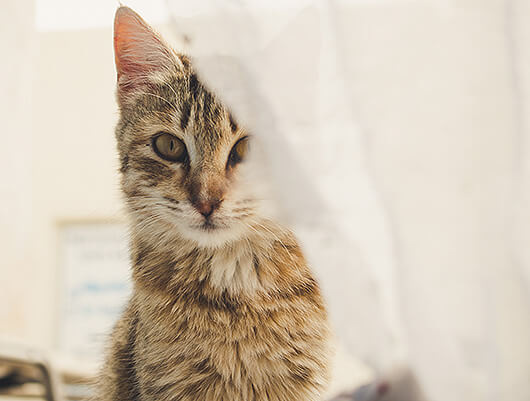
Whisker-Kitty

Most people believe cats purr when they are content or happy, end of story. While cats do purr when they are content, researchers attempting to uncover the answer to this 3,000-year-old mystery are finding the answer more complicated – and fascinating - than an expression of happiness.
All domestic cats purr, as do many wild cats, and purring occurs in a variety of situations. When cats purr in the presence of other unknown cats or kittens, the behavior may serve as a friendly greeting or to convey submissiveness. While it’s true that cats purr contentedly while on their pet parent’s lap, they also purr when they give birth, when they are frightened or even injured. Because kitties clearly cannot be content in all these situations, contentment or friendliness cannot be the only reason they purr.
So why else would they purr?
Natural selection tells us that a particular behavior or trait will persist through multiple generations only if it aids survival. For purring to exist in both domestic and wild cats, there must be something vital about the behavior. Purring is created by the vibration of the cat’s larynx and diaphragm, and therefore requires an expenditure of energy. If a kitty is sick, surely they wouldn’t burn calories unless it resulted in some sort of benefit, right?

Striking-Kitty-Face

We're all familiar with the expression “cats have nine lives”. Similarly, veterinarians have an old saying that if you put a cat who has broken bones in a room with other cats, the breaks will heal. In fact, cats are amazing self-healers: they have fewer post-operative complications than dogs, have a lower incidence of bone and joint disease than dogs, and 90% of cats survive high-rise falls! What could account for this remarkable set of facts, and is it related to purring?
In fact, there’s striking evidence that purring has healing properties. Researchers have found that vibrations in the frequency range between 25-50 hertz promote bone strength, stimulate healing of fractures, provide pain relief and help heal tendons and muscles. Bioacoustic researchers studied the purring of dozens of both domestic and wild cats, paying particular attention to frequency, pitch, loudness, and duration of purring in relation to the cat’s behavior. Guess what they found? The purring is in the range of 25-50 Hz, the exact range associated with healing properties such as increased bone density!
Maybe this has something to do with a cat’s uncanny ability to heal. And just maybe purring is part of the reason why, when we fall ill, having a cat sit on our laps can actually make us feel better! Whether it is simply the comfort of having a friend nearby, or the vibrational frequencies of your kitty’s rumble, the joy of a cat purring on your lap is priceless.


References:
Rubin C, McLeod K. Promotion of bony in growth by frequency specific, low amplitude mechanical strains. Clinical Orthopedics and Related 
Research, 289, 165-174, 1994.
Elizabeth von Muggenthaler The felid purr: A healing mechanism? Proceedings from the 12th International Conference on Low Frequency Noise 
and Vibration and its Control. Bristol, UK, September 18-20, 2006.
Chen et al, The Effects of Frequency of Mechanical Vibration on Experimental Fracture Healing. Chinese Journal of Surgery, 32 (4), 217-219, 1994.
Leduc A, Lievens P, Dewald J. The influence of multidirectional vibrations on wound healing and on regeneration of blood and lymph vessels. 
Lymphology, 14(4), 179-85, 1981.
Rothschild BM, Rothschild C, Woods RJ. Inflammatory arthritis in large cats: an expanded spectrum of spondyloarthropathy. J Zoo Wildl Med. 1998
 Sep;29(3):279-84.
Garman R, Gaudette G, Donahue LR, Rubin C, Judex S. Low-level accelerations applied in the absence of weight bearing can enhance trabecular
 bone formation. J of Orthop Res. 2007 Jun;25(6):732-40.
Lundeberg TC. Vibratory stimulation for the alleviation of chronic pain. Acta Physiol Scand Suppl. 1983;523:1-51.

Saturday, October 28, 2017

The Real Reasons Why People Prefer Cats


Ask any pet lover if they consider themselves Team Cat or Team Dog, and you’re probably going to get some strong opinions. Although the number of U.S. households with dogs exceeds those with cats, felines win in measures of overall numbers. According to the latest survey, about 94 million felines live in the U.S. right now. Clearly, plenty of people play for Team Cat. 


After a long dark era where cat lovers were given a hard time (crazy cat lady stereotypes, anyone?), I’m pleased to see the merits of living with cats far outweighing any negative remarks. In fact, we seem to be enjoying a great renaissance of cat appreciation! Even in the virtual world, cats rule the internet thanks to endless YouTube videos. They're beautiful, mysterious creatures who share a deep and abiding connection with us mere humans. What’s not to love? 

kittens

If you spend enough time talking to people who consider themselves cat people, a few common themes emerge. Let’s take a look at some of the top reasons people find themselves gravitating towards Team Cat ….

  1. Ease of Care. When you bring home a puppy, you wind up with a 10-page list of requirements covering training, harnesses, toys, and socialization. Cat parents view such lists with mild amusement. By comparison, cats are pretty low-maintenance. Once you cover the basic necessities such as food, water, and a litter box, the rest is just bonus points! 
  1. Independence. Cats are naturally independent, unlike dogs who long to be part of a pack. Of course, certain cats are more social than others, but overall they aren’t as stressed by alone time as your average dog. To many people, this laid-back relationship can be very appealing! Like the cool kid in school who's a bit aloof, you almost love them just a little bit more.
  1. Big Personalities. Interestingly enough, both dog lovers and cat lovers mention personality as one of the reasons they chose one over the other. Clearly, they’re both right. It’s all about who meshes best with the family!

On a purely personal note, certain types of people tend to gravitate towards feline companionship. Folks who describe themselves as introverted, laid-back, shy, refined and independent seem to be naturally inclined toward the feline temperament. There are some who also claim intelligence as a trait of cat people, but as someone who adores both, I’m not going to touch that one!

napping-in-bed

As for the notion that it’s mostly women who love cats, nothing could be further from the truth! Cat dudes are loud and proud with their love of all things feline. A few feline fans who just so happen to be famous guys include Christopher Walken, Macklemore, Marc Maron, James Franco, Gilles Marini, Russell Brand and Ian Somerhalder!
Of course, there are many among us who simply can't pick one over the other. In fact, more than half of cat households are also dog households. I have been blessed with cats, dogs, and a few other types of pets throughout my life, and I love them all equally! While it’s fun to play up the differences between dog people and cat people, we’re all animal lovers, and that’s what matters the most.
So, how about you? Are you a charter member of Team Cat? 


Wednesday, June 7, 2017

Tips for Calming Stressed Cats


beautiful-whiskery-kitty

It’s a common belief that cats are highly susceptible to stress. How many memes have you seen referencing “neurotic kitty”? But the truth is, a cat’s normal state shouldn’t be stressed, she should be happy and relaxed! If our kitties are constantly showing signs of stress and anxiety, we owe it to them to identify solutions to help them feel better.
So how do you know if your cat is stressed versus just being naturally feisty? Well, the signs are subtle. Oftentimes, it’s a subtle change in behavior that doesn’t even seem to be related to anxiety. Some of the more common changes include . . . . 

  • Urinating or defecating outside the litter box
  • Isolating themselves from others in the household
  • Excessive grooming
  • Prolonged periods of sleep
  • Excessive vocalization beyond what is typical (remember, some kitties are naturally more talkative than others)
  • Increased scratching
  • Aggression

Over time, stress hormones can contribute to physical symptoms such as diarrhea, constipation, changes in appetite or even the painful condition known as Feline Lower Urinary Tract Disease (FLUTD). Be aware that these signs are symptomatic of other medical conditions, so don’t be too quick to assume you’re dealing with feline anxiety before discussing the symptoms with your veterinarian. One of the best ways to minimize the likelihood of chronic medical conditions is to feed your cat a high-quality, appropriate diet. Since you’re reading the Life’s Abundance blog, I’m probably preaching to the choir on that topic!

peeking-kitty

Let’s say your cat is exhibiting one or more of these signs of anxiety. You’ve brought her in for a check-up and medically, everything checks out. What next?
First, try to pinpoint the source of the stress and eliminate it, if possible. We tend to view these issues through our human lens, so it’s important to remember that unexpected things can be at the root of your cat’s stress. Some of the more obvious reasons include changes in living conditions ~ from divorce, moves, a new companion animal in the house, or new babies ~ to the most obvious physical cause, which is pain. But little changes can also provoke anxiety: new furniture, a neighbor’s dog barking, a dirty litter box, being denied access to their favorite location, a neighborhood tomcat taunting them from the yard, even music they don’t like! As you can see, it’s a long list.
Environmental modifications can make a big difference. For indoor cats, boredom can be a near-constant stressor, so provide lots of vertical space for exploration (they love being elevated). Home-built or store-bought cat trees are a great solution. Puzzle feeders can be a good source of environmental enrichment, as they appeal to their hunting instinct. Pheromone diffusers or sprays can also have a calming effect for some.

blue-eyed-kitty

And lastly, make sure your kitty is getting daily interaction and enrichment with you. It’ll build their confidence and form deeper connections with their caregivers. Believe it or not, many behaviorists recommend clicker training as a great way to bond with your cat. This gives her a sense of control over her environment and also offers the promise of a yummy incentive like Gourmet Cat Treats for Healthy Skin & Coat. Cats can learn amazing tricks with clicker training and treats, but it’s also a great way to reward good behavior generally.
Try to set aside some one-on-one time for your cat in the space where she is most relaxed. Optimally, this is something you’ll do every day at the same time because cats are true creatures of habit. No distractions, which means leave your phone in another room and turn off the TV. Brush, pet, sing . . . . do whatever pleases your cat the most. It’ll be good for both of you!
A happy cat means a happy you! If you think your cat is suffering from stress or anxiety, try some of these suggestions to help them live the “purr-fect” life.

For more information on feeding your pets a healthy, premium line of pet food and treats, please use the Contact Me page or visit www.PremiumPetFoodStore.com!