Showing posts with label Feline Stress. Show all posts

Friday, November 2, 2018

Rub My Belly . . . No Wait . . . Don't! ~ The Best Way to Pet a Cat


cat-petting

If you haven't had much experience with cats, or if you want to teach your kids how they can be affectionate without worrying about getting scratched, we’ve got the inside scoop on how felines want to be petted.
So, what’s the correct way to pet a cat? You may think, no one needs to tell me how to do a simple thing. But the truth is that petting a cat isn’t something you can do by intuition alone. If you’ve never had a close relationship with a cat, maybe because you had a bad experience before, don’t worry. We can help you change all that with a short tutorial. Simply follow the guidelines below and you too can begin to know the joys of feline companionship.
If there’s one rule to keep in mind, it’s that petting a cat is very different from petting a dog. While dogs usually love a good belly rub, cats typically do not. Why is this true? It boils down to psychology. Generally speaking, dogs are usually pretty secure in their identity as a predator. You may even know of a few tiny dogs who believe themselves to be big bad wolves (looking at you Chihuahuas and Terriers). However, cats are more cautious, because in the wild, they identify as both predator and prey. That’s why cats remain on high alert much of the time. If a cat feels threatened ~ like when someone they don’t know unexpectedly touches their soft underbelly ~ he will act defensively to protect his vital organs. Better you than him, he would say.

right-spot

So, the secret spots where cats enjoy being scratched are where a cat’s scent glands are located: in the cheeks, the top of the head and at the base of the tail. When a cat rubs against a piece of furniture or your leg, it’s referred to as bunting. Bunting is how a cat spreads his scent. It’s his way of saying, “Hey, I like you and want to include you among the things that make me happy.” Bunting releases pheromones, making objects – or people - in his environment smell familiar. It also has the added benefit of reducing stress!
Around the head is a sure-fire hit with most kitties. Rub your cat along the crown at the top of the head, gently under his chin, in front of the ears and cheeks behind the whiskers. Hit this last spot just right and your cat will actually rotate his whiskers forward, indicating interest and friendliness.
With cats, it really pays to be observant about how each individual responds to different kinds of touches. Most cats like it when you run your hand along the spine. Some even enjoy gentle pressure at the base of the tail. In fact, they’ll let you know by sticking their tails straight up. If you notice any growling or tail-swishing, these are clues that your cat is becoming overstimulated and may lash out. For cats with heightened sensitivities, it’s best to stick with gently scratching their head and neck.

kitty-scritches

If you’re interacting with a timid kitty, always let them come to you first. As you might imagine, chasing someone down is not a good way to start a new relationship with a cat (or anyone, for that matter). Instead, try a “peace offering.” When approaching timid cats, give them a couple of tasty morsels, like our Gourmet Cat Treats for Skin & Coat Health, to show that you’re friendly and mean no harm. This positive reinforcement for affectionate behavior could have your cat saying, “I think this is the beginning of a beautiful friendship.”
We hope you find these tips helpful for tuning you in to your inner cat nature, and that you too will now feel completely at ease with all kitties.


*  *  *  *  *  *  *  *  *  *  *


Raven is an engaging entrepreneur who encourages others to celebrate pets (and ALL animals) as part of the family, as well as keep them happy, healthy, and spoiled with her Holistic Healing, Animal Intuition, Aromatherapy, Animal Reiki (www.HolisticPetsAndPeeps.com), as well as her premium pet food business (http://www.PremiumPetFoodStore.com)

For more information, please visit her Facebook page to PM her (https://www.facebook.com/HolisticPetsNPeeps), or email her at HolisticPetsAndPeeps@gmail.com.

Saturday, September 29, 2018

Tips for Calming Stressed Cats


beautiful-whiskery-kitty

It’s a common belief that cats are highly susceptible to stress. How many memes have you seen referencing “neurotic kitty”? But the truth is, a cat’s normal state shouldn’t be stressed, she should be happy and relaxed! If our kitties are constantly showing signs of stress and anxiety, we owe it to them to identify solutions to help them feel better.
So how do you know if your cat is stressed versus just being naturally feisty? Well, the signs are subtle. Oftentimes, it’s a subtle change in behavior that doesn’t even seem to be related to anxiety. Some of the more common changes include . . . . 

  • Urinating or defecating outside the litter box
  • Isolating themselves from others in the household
  • Excessive grooming
  • Prolonged periods of sleep
  • Excessive vocalization beyond what is typical (remember, some kitties are naturally more talkative than others)
  • Increased scratching
  • Aggression

Over time, stress hormones can contribute to physical symptoms such as diarrhea, constipation, changes in appetite or even the painful condition known as Feline Lower Urinary Tract Disease (FLUTD). Be aware that these signs are symptomatic of other medical conditions, so don’t be too quick to assume you’re dealing with feline anxiety before discussing the symptoms with your veterinarian. One of the best ways to minimize the likelihood of chronic medical conditions is to feed your cat a high-quality, appropriate diet. Since you’re reading the Life’s Abundance blog, I’m probably preaching to the choir on that topic!

peeking-kitty

Let’s say your cat is exhibiting one or more of these signs of anxiety. You’ve brought her in for a check-up and medically, everything checks out. What next?
First, try to pinpoint the source of the stress and eliminate it, if possible. We tend to view these issues through our human lens, so it’s important to remember that unexpected things can be at the root of your cat’s stress. Some of the more obvious reasons include changes in living conditions ~ from divorce, moves, a new companion animal in the house, or new babies ~ to the most obvious physical cause, which is pain. But little changes can also provoke anxiety: new furniture, a neighbor’s dog barking, a dirty litter box, being denied access to their favorite location, a neighborhood tomcat taunting them from the yard, even music they don’t like! As you can see, it’s a long list.
Environmental modifications can make a big difference. For indoor cats, boredom can be a near-constant stressor, so provide lots of vertical space for exploration (they love being elevated). Home-built or store-bought cat trees are a great solution. Puzzle feeders can be a good source of environmental enrichment, as they appeal to their hunting instinct. Pheromone diffusers or sprays can also have a calming effect for some.

blue-eyed-kitty

And lastly, make sure your kitty is getting daily interaction and enrichment with you. It’ll build their confidence and form deeper connections with their caregivers. Believe it or not, many behaviorists recommend clicker training as a great way to bond with your cat. This gives her a sense of control over her environment and also offers the promise of a yummy incentive like Gourmet Cat Treats for Healthy Skin & Coat. Cats can learn amazing tricks with clicker training and treats, but it’s also a great way to reward good behavior generally.
Try to set aside some one-on-one time for your cat in the space where she is most relaxed. Optimally, this is something you’ll do every day at the same time because cats are true creatures of habit. No distractions, which means leave your phone in another room and turn off the TV. Brush, pet, sing . . . . do whatever pleases your cat the most. It’ll be good for both of you!
A happy cat means a happy you! If you think your cat is suffering from stress or anxiety, try some of these suggestions to help them live the “purr-fect” life.

For more information on feeding your pets a healthy, premium line of pet food and treats, please use the Contact Me page or visit www.PremiumPetFoodStore.com!

*  *  *  *  *  *  *  *  *  *  *


Raven is an engaging entrepreneur who encourages others to celebrate pets (and ALL animals) as part of the family, as well as keep them happy, healthy, and spoiled with her Holistic Healing, Animal Intuition, Aromatherapy, Animal Reiki (www.HolisticPetsAndPeeps.com & www.HealingOilsForAnimals.com), as well as her premium pet food business (http://www.PremiumPetFoodStore.com)

For more information, please visit her Facebook page to PM her (https://www.facebook.com/HolisticPetsNPeeps), or email her at HolisticPetsAndPeeps@gmail.com.


Wednesday, June 7, 2017

Tips for Calming Stressed Cats


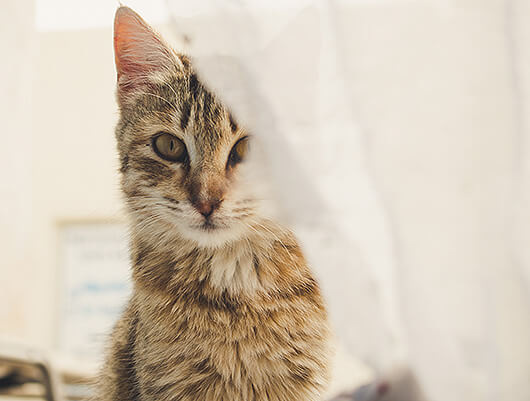
beautiful-whiskery-kitty

It’s a common belief that cats are highly susceptible to stress. How many memes have you seen referencing “neurotic kitty”? But the truth is, a cat’s normal state shouldn’t be stressed, she should be happy and relaxed! If our kitties are constantly showing signs of stress and anxiety, we owe it to them to identify solutions to help them feel better.
So how do you know if your cat is stressed versus just being naturally feisty? Well, the signs are subtle. Oftentimes, it’s a subtle change in behavior that doesn’t even seem to be related to anxiety. Some of the more common changes include . . . . 

  • Urinating or defecating outside the litter box
  • Isolating themselves from others in the household
  • Excessive grooming
  • Prolonged periods of sleep
  • Excessive vocalization beyond what is typical (remember, some kitties are naturally more talkative than others)
  • Increased scratching
  • Aggression

Over time, stress hormones can contribute to physical symptoms such as diarrhea, constipation, changes in appetite or even the painful condition known as Feline Lower Urinary Tract Disease (FLUTD). Be aware that these signs are symptomatic of other medical conditions, so don’t be too quick to assume you’re dealing with feline anxiety before discussing the symptoms with your veterinarian. One of the best ways to minimize the likelihood of chronic medical conditions is to feed your cat a high-quality, appropriate diet. Since you’re reading the Life’s Abundance blog, I’m probably preaching to the choir on that topic!

peeking-kitty

Let’s say your cat is exhibiting one or more of these signs of anxiety. You’ve brought her in for a check-up and medically, everything checks out. What next?
First, try to pinpoint the source of the stress and eliminate it, if possible. We tend to view these issues through our human lens, so it’s important to remember that unexpected things can be at the root of your cat’s stress. Some of the more obvious reasons include changes in living conditions ~ from divorce, moves, a new companion animal in the house, or new babies ~ to the most obvious physical cause, which is pain. But little changes can also provoke anxiety: new furniture, a neighbor’s dog barking, a dirty litter box, being denied access to their favorite location, a neighborhood tomcat taunting them from the yard, even music they don’t like! As you can see, it’s a long list.
Environmental modifications can make a big difference. For indoor cats, boredom can be a near-constant stressor, so provide lots of vertical space for exploration (they love being elevated). Home-built or store-bought cat trees are a great solution. Puzzle feeders can be a good source of environmental enrichment, as they appeal to their hunting instinct. Pheromone diffusers or sprays can also have a calming effect for some.

blue-eyed-kitty

And lastly, make sure your kitty is getting daily interaction and enrichment with you. It’ll build their confidence and form deeper connections with their caregivers. Believe it or not, many behaviorists recommend clicker training as a great way to bond with your cat. This gives her a sense of control over her environment and also offers the promise of a yummy incentive like Gourmet Cat Treats for Healthy Skin & Coat. Cats can learn amazing tricks with clicker training and treats, but it’s also a great way to reward good behavior generally.
Try to set aside some one-on-one time for your cat in the space where she is most relaxed. Optimally, this is something you’ll do every day at the same time because cats are true creatures of habit. No distractions, which means leave your phone in another room and turn off the TV. Brush, pet, sing . . . . do whatever pleases your cat the most. It’ll be good for both of you!
A happy cat means a happy you! If you think your cat is suffering from stress or anxiety, try some of these suggestions to help them live the “purr-fect” life.

For more information on feeding your pets a healthy, premium line of pet food and treats, please use the Contact Me page or visit www.PremiumPetFoodStore.com!